Although I finished this one last weekend, I haven’t had time to blog about it. So here, we are, back to Saturday – I’m up nice and early and into it. The photo this is based on was taken some distance from the site by Phu Tran. One of the reasons I like this shot is the strong lines of the chimney and power poles through the centre of the scene. As I keep painting the freezing works over and over again I can feel what I am painting, the how I am painting it, is becoming more focused. The color palette remains the same, even how I apply the paint has stayed the same, but the lines and final marks are becoming much more of a focus for me. Some of the earliest works now feel a little ‘soft’ to me and may yet get some tweaking.

It is the middle of summer here; hot and muggy most days. I am not using my art room at the moment because it is far too hot out there; the walls are iron and there’s no ceiling, just the roof, so nothing to deflect the heat. I use our third bedroom as an office for the newspaper we publish. I have commandeered the desk for painting. I have a table-top easel, a roll of paper towels, old wash clothes, a small box of paints, a jar of brushes and a giant bucket of water. Oh, and my color theory notebook with all my color experiments in it and a pile of canvas – I’m about to move from 16×16″ to 20×20″.
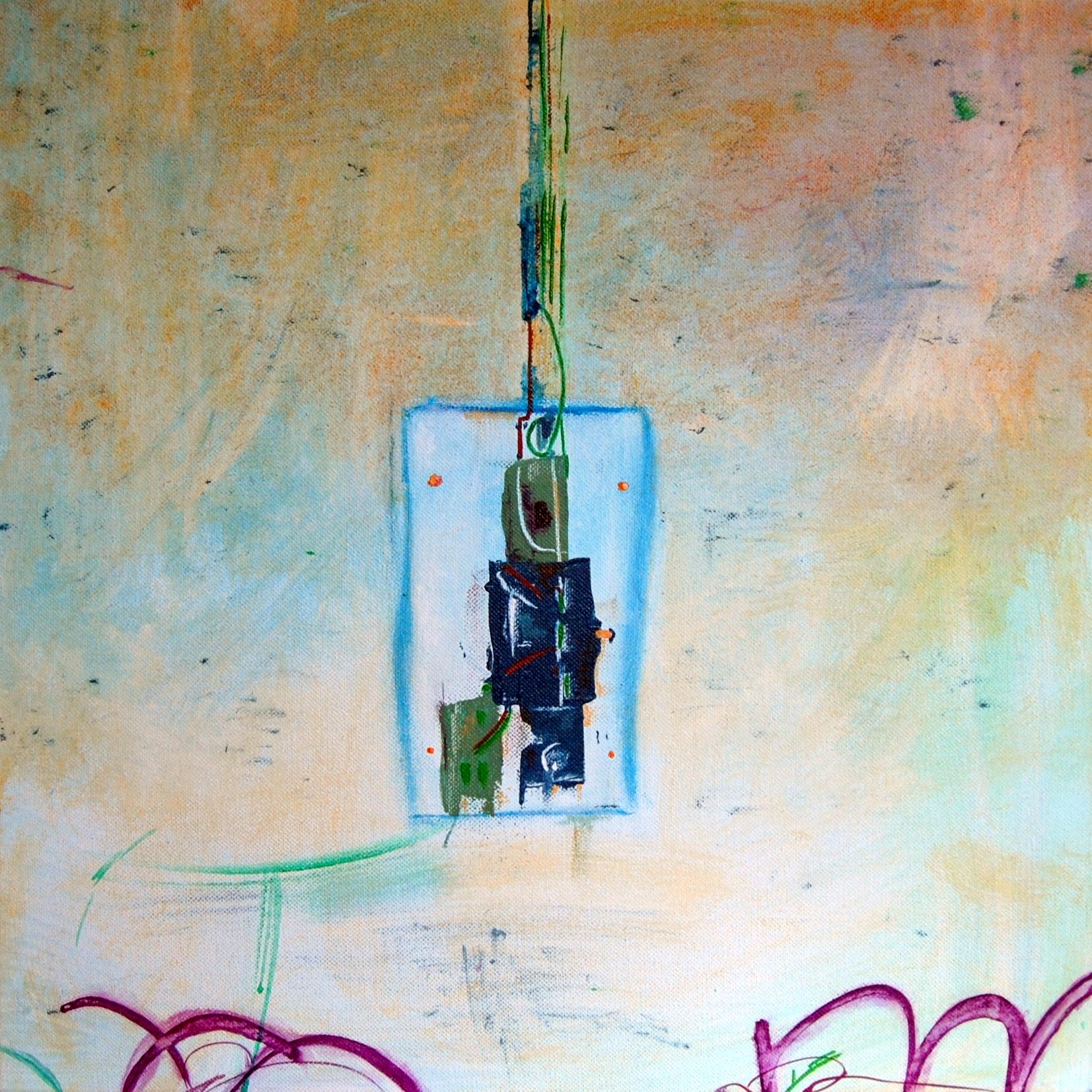
So, this one is 16×16″ acrylic on canvas, and is for sale on here on Etsy.




 Cath Sheard Art