Tag: process

  • Landscapes for exhibition

    Landscapes for exhibition

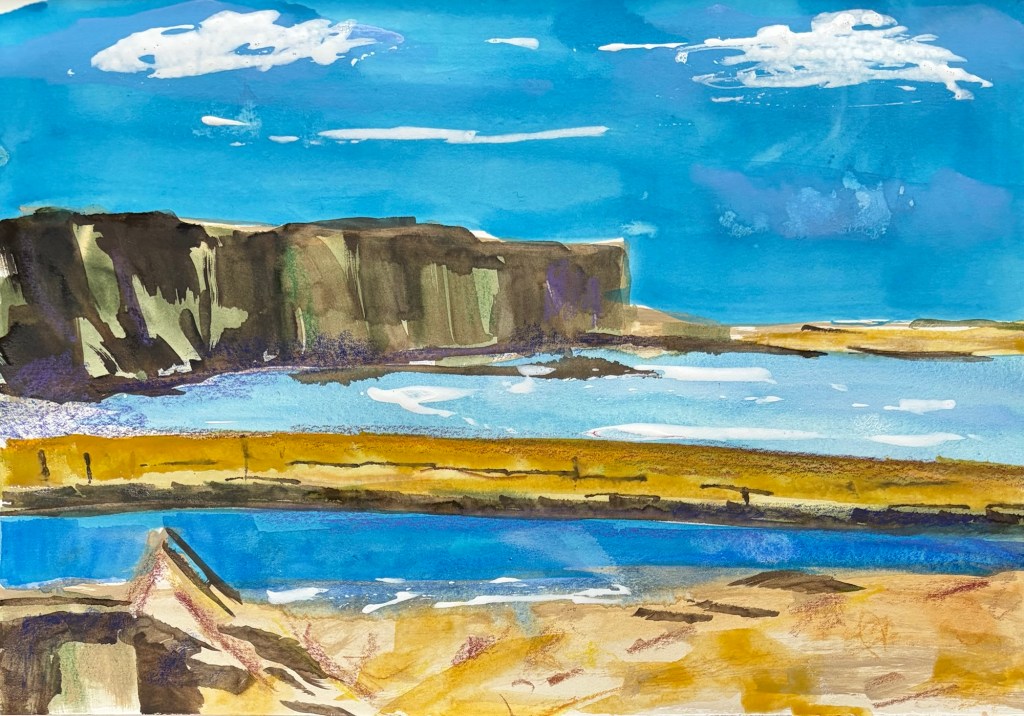
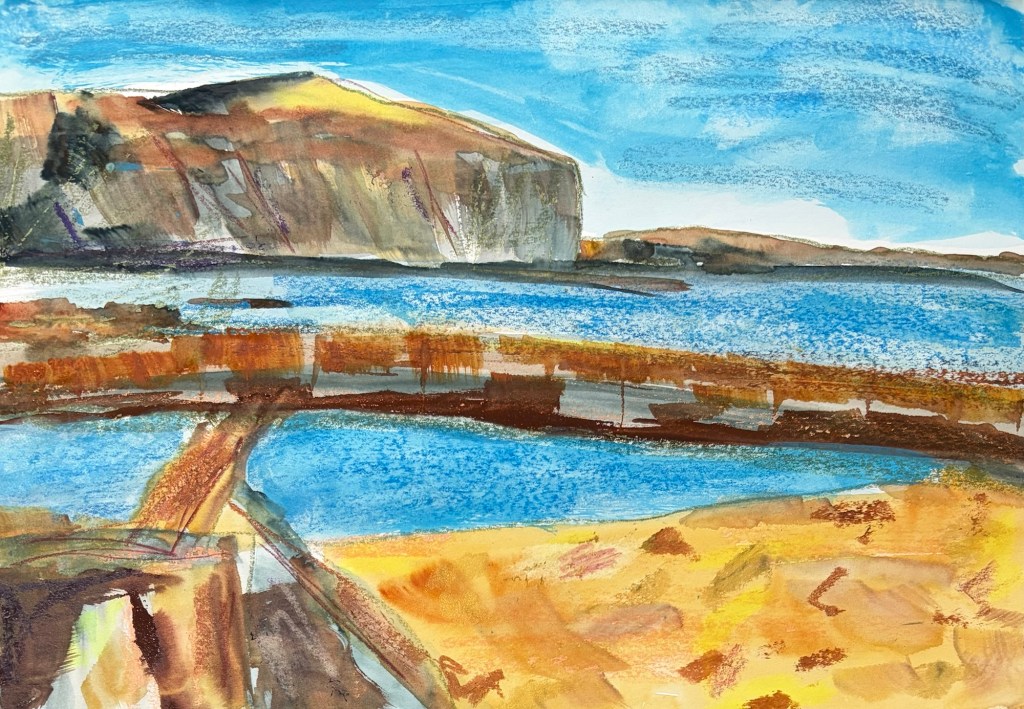
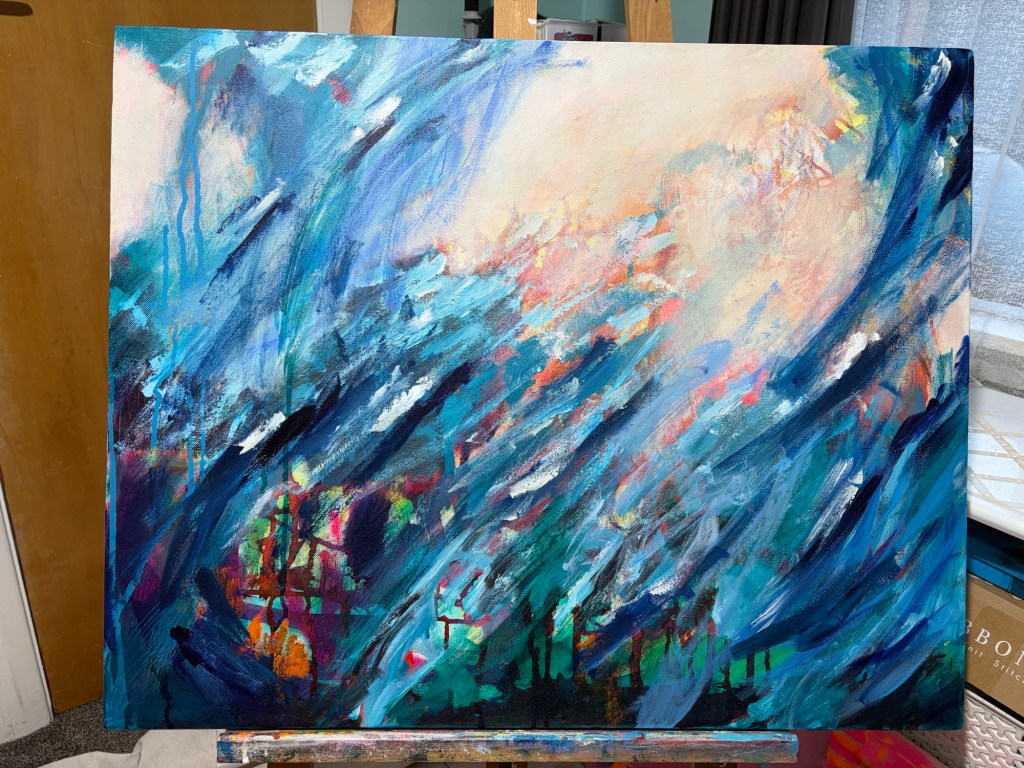
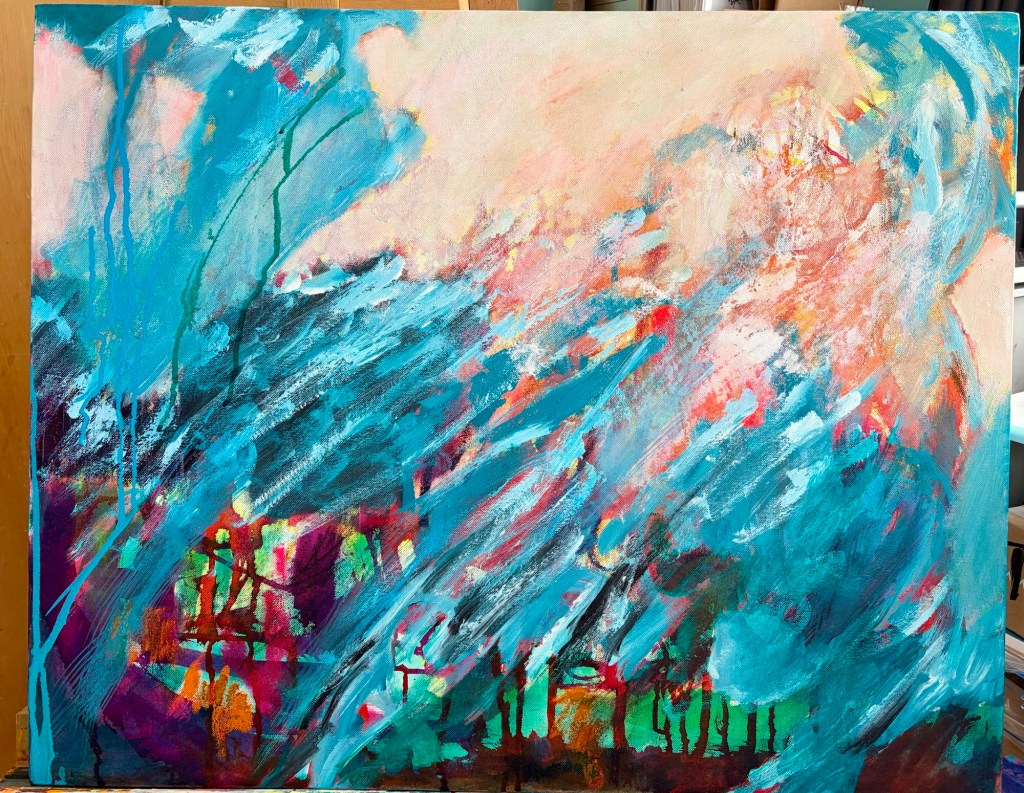
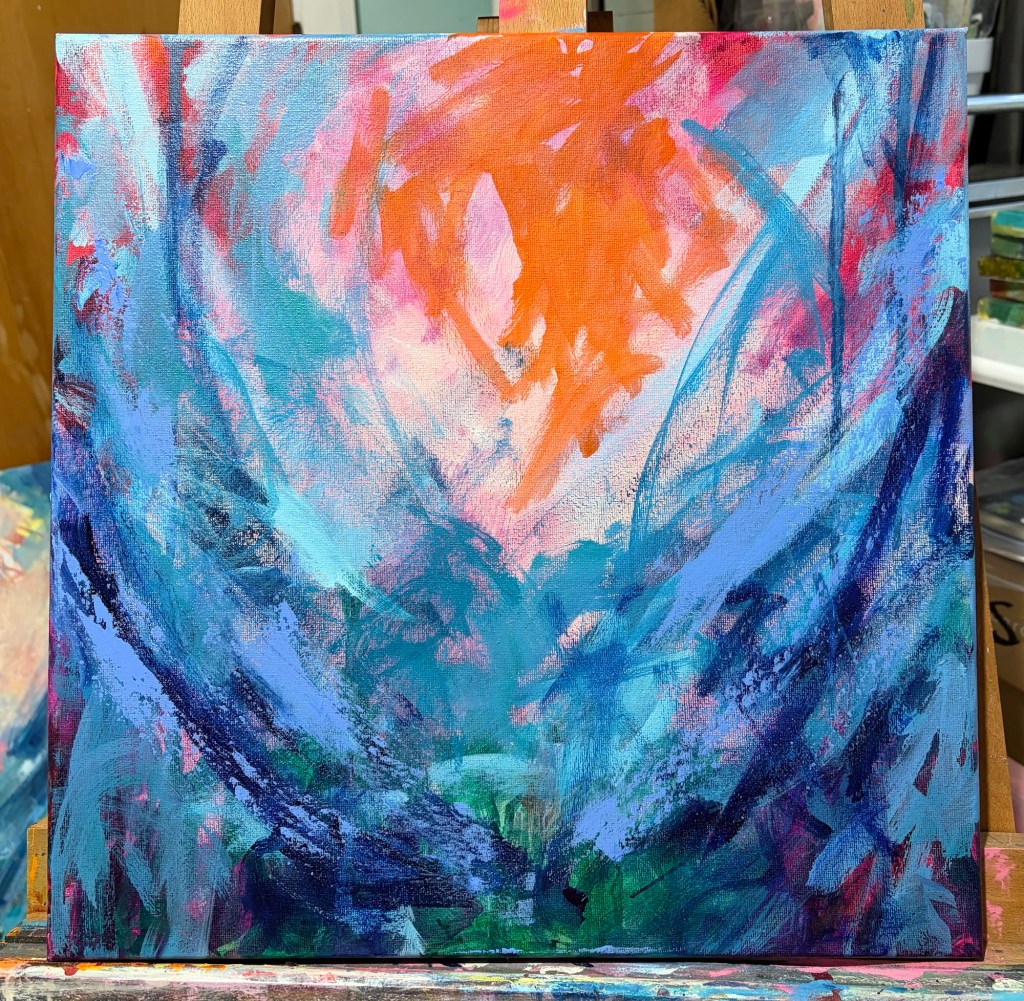
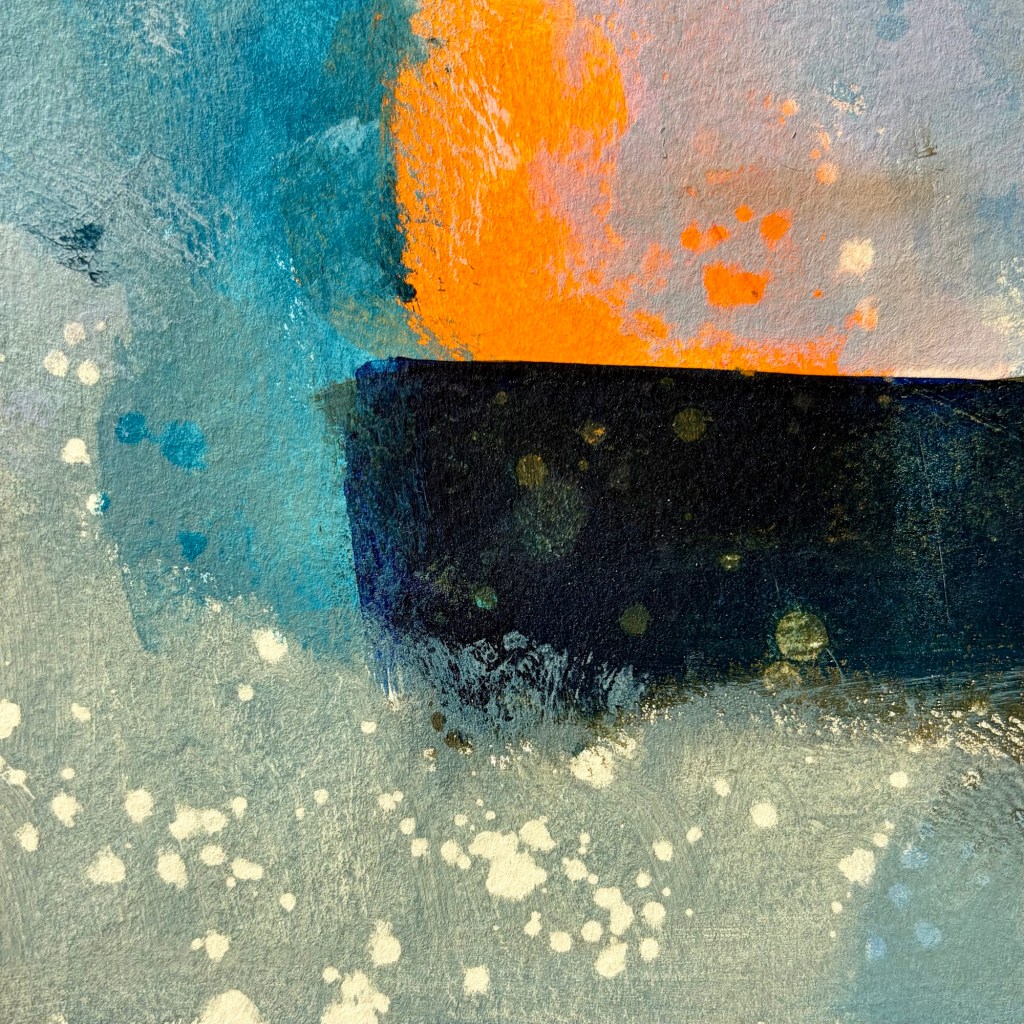
    Left Bank Art Gallery has a member’s exhibition coming up, ‘The sum of all parts’. I’m entering 3 20x20cm paintings floating in 30×30 wooden frames. It’s the first time I’ve used the floating frame set and love them.

    I’m a messy painter so covered all the wood in painter’s tape before I picked up a crayon or brush. It stayed clean, so was worth the effort.

    The process I used for the works was my standard semi-abstract process; paint, collage, more paint, more collage, mark making, (rinse and repeat) and final touches.

    I’ve been reading colour theory books and testing some limited colour palettes. I settled on orange, deep violet and sap green for this trio. I’ve also been playing with red violet, blue green and Indian yellow.

    The advantage of a limited palette is really understanding what the colours can do. Once you settle on one or two limited palettes, you can buy those six colours in all the materials you like – acrylic, watercolour, ink, oil pastels, crayons, pencils… You get the idea!

    Working with so much blue around them was disconcerting!
  • Stencilled tissue paper

    Stencilled tissue paper

    I’ve been watching Melissa Reed on YouTube and love the way she colours tissue paper with acrylic inks. I’ve had time off work after getting significant liquid nitrogen done on my face, so yesterday grabbed some inks & stencils for play time.

    I used her basic technique but did it my way. I put the tissue paper on A3 laminating pouches then wet down using my sprayer bottle. I put stencils down and rolled with a brayer to adhere to the tissue. I added drops of acrylic inks, sprayed again & tipped a bit if needed, then left to dry.

    I love how vibrant the final tissue sheets are. The front is more muted, and the back is shiny due to being against the laminating pouch plastic. This is a technique I’ll be using again, that’s for sure.

  • Noticing, and muscle memory

    Noticing, and muscle memory

    I wrote here about one of the Sketchbook Revival 2026 lessons that grabbed my attention – visual prompts with Jane Davies. I quickly filled 3 sketchbooks with prompts… just two pieces of collage per page to respond to. I’ve been working through the first sketchbook over the last couple of weeks, and completed it today.

    I love this exercise because it builds muscle memory, training my hand to easily make the shapes that are uniquely mine as an artist. It stretches me as an artist, thinking how to respond to the start in a way that’s true to me. Looking through the completed sketchbook is a tour through my visual language, a reminder of the colors, shapes and lines that call to me in my work.

  • R&F Drawing Oils

    As a mixed media artist I use watercolour, acrylic, almost anything that’s water soluble, acrylic ink, pencils, pens and collage. I occasionally use pastels, but not often. I did a lot of pastel work a few years back but the skin on my fingers didn’t cope and, for the sort of work I do, they need a fixative.

    I’ve tried oil pastels in the past but don’t like the fact they don’t dry, and get everywhere. When I do use them it’s for small accents and I seal it with matte fluid medium. I don’t use oil paint because of the smell and chemicals.

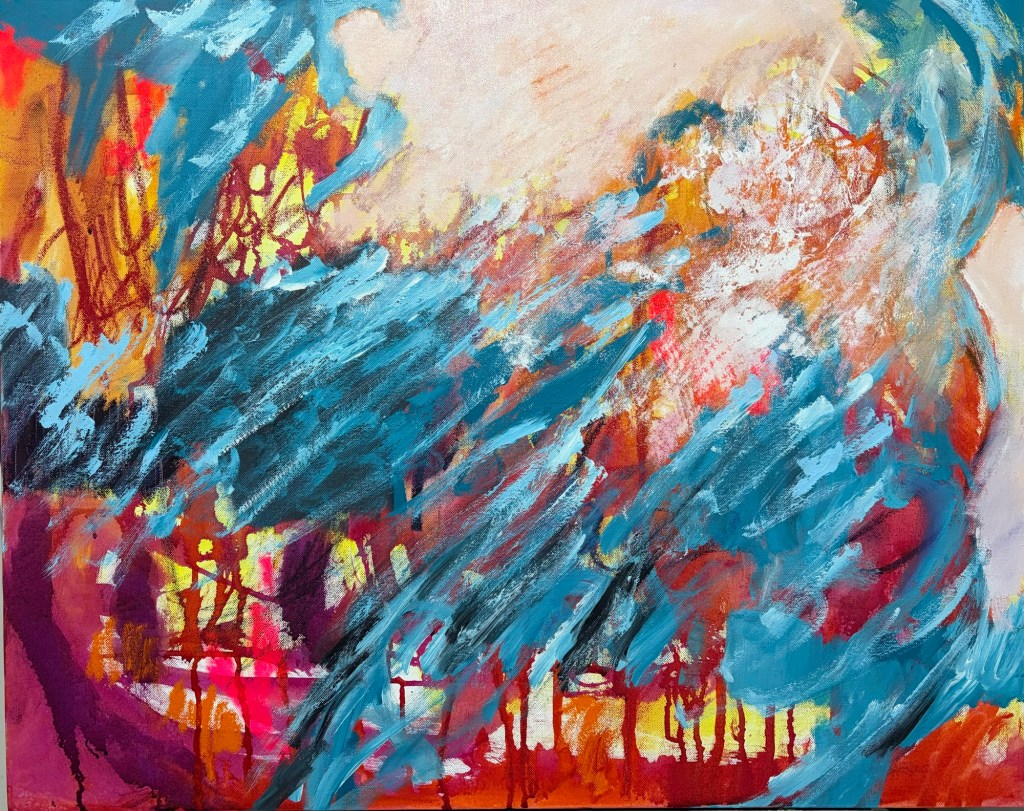
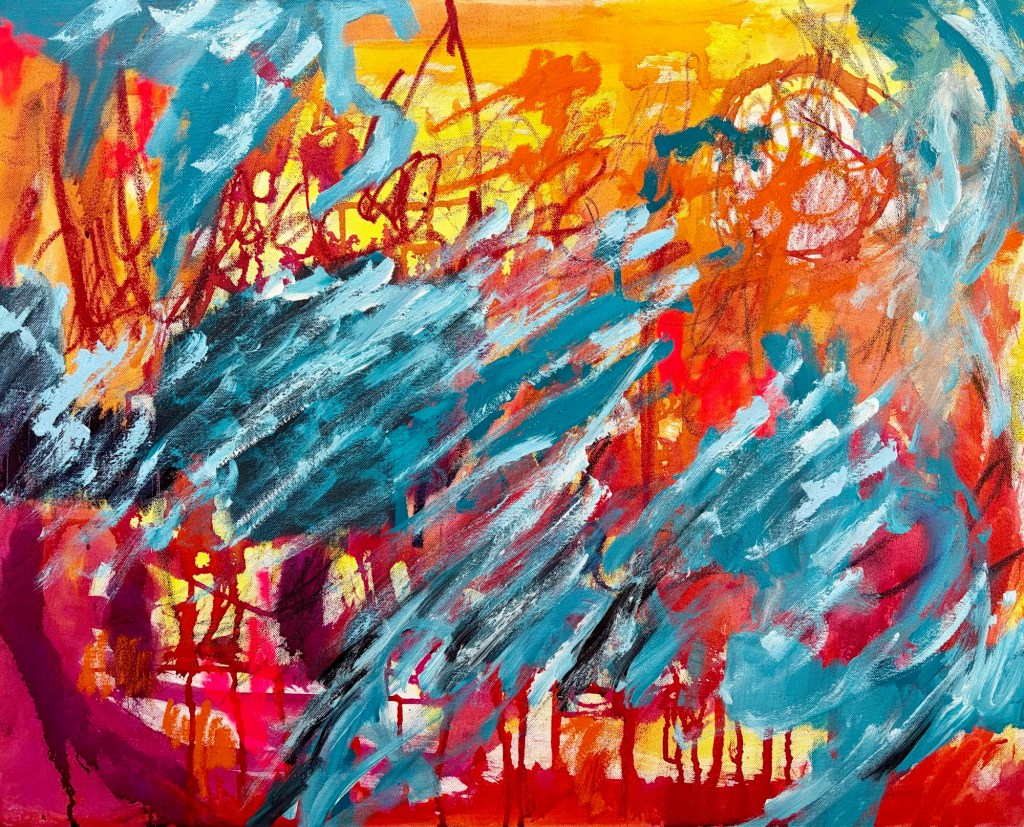
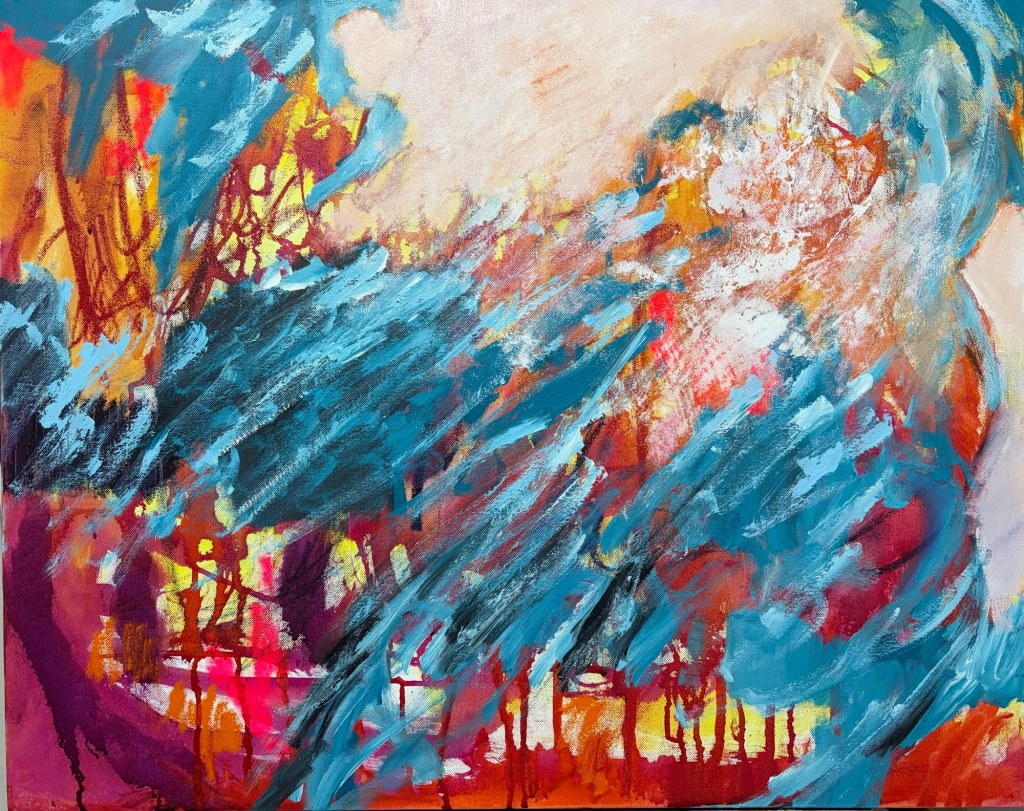
    Recently I watched some YouTube artists reviewing the new R&F Drawing Oil Sticks and thought they sounded worth a shot. I bought the introductory set of six modern colours. Oh my god … love! I’ve since bought another ten or so colours. They’re easy to use, creamy and rich, and dry fairly quickly. I use them for highlights and love the vibrancy of them.

    The orange marks top left, and very pale blue centre right are drawing oil stick.
    The teal blue on the far right is drawing oil stick.
  • Practice means progress

    Practice means progress

    In March I did Marabeth Quin’s online course Mixed Media Collage & the Intuitive Landscape. In the course you make 16 small and 4 slightly larger abstract landscapes. I repeated the exercise almost straight away.

    Yesterday I started a set of 12 larger ones, and today started 12 smaller ones. When they’re complete they’ll go into my sketchbook, joining the earlier sets, along with notes about each one.

    Why create so many when they’re just going straight into my sketchbook? I loved the course, and want the learnings to become embedded in my art practice. But I want to create my work, using what I learnt, not create a simile of Marabath’s work.

    The best way to achieve that is through ongoing practice. I follow Niamh Baly, and she often says “practice makes progress” so that’s what I’m aiming for … progress.

    This isn’t complete yet, but I like where it’s headed.
    My desk covered in pieces I’m working on in series.